Case Study
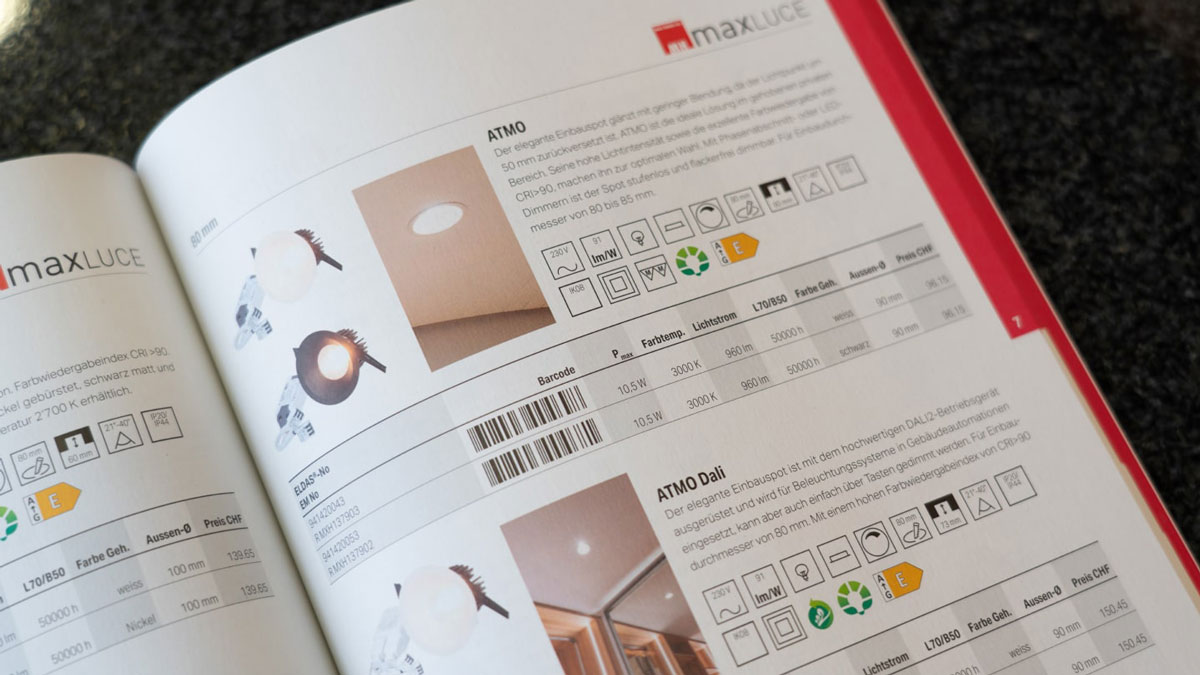
The BACHMANN Group, a manufacturer of electrical components and intelligent power distribution systems, produced its catalogs completely manually in InDesign. Product data was spread across various sources, translations were coordinated manually, and each catalog issue was a time-consuming project.

Three factors made automation necessary:
First, the entire database was built up:
upshot: Clean, structured product database in advastamedia
The systems were brought together:
upshot: Standardised processes for consistent catalogs
The outputs were automated:
upshot: Fully automated catalog production
Service & methodology:
Technical integration:
Sustainable solution:
If you're also struggling with manual catalog production — if your catalogs take a long time, if errors are frequent, if you can't react flexibly to market changes — then it's time for automation.
The good thing: With a structured approach (data structure → process construction → automation), you can fully automate your catalog production in 20 weeks and immediately achieve efficiency gains.
.svg)
On the one hand, it is increasingly important in the print sector to be flexible in terms of circulation and printing intervals. In combination with the high level of automation in the catalog, BACHMANN has now created the conditions for this. On the other hand, manufacturers' product data quality requirements have been increasing for years. As a result of such a project, this improves almost automatically when the data continues to be used afterwards.
Jan Kittelberger
Managing Director Kittelberger media solutions
Book a free catalog optimization check.
We analyze your current catalog production, identify automation potential and show you how you can double your efficiency.
Book an optimization check
.svg)
Switch to advastamedia now.
.svg)
Tested in numerous projects
Flexible. Well thought out. individual.

Whether it's a website, partner, customer or shop: Your data will be in the right place faster and better.
Ask the AI about advastamedia:


Kittelberger media solutions GmbH
Bayernstraße 8
72768 Reutlingen